The chart structured automatically
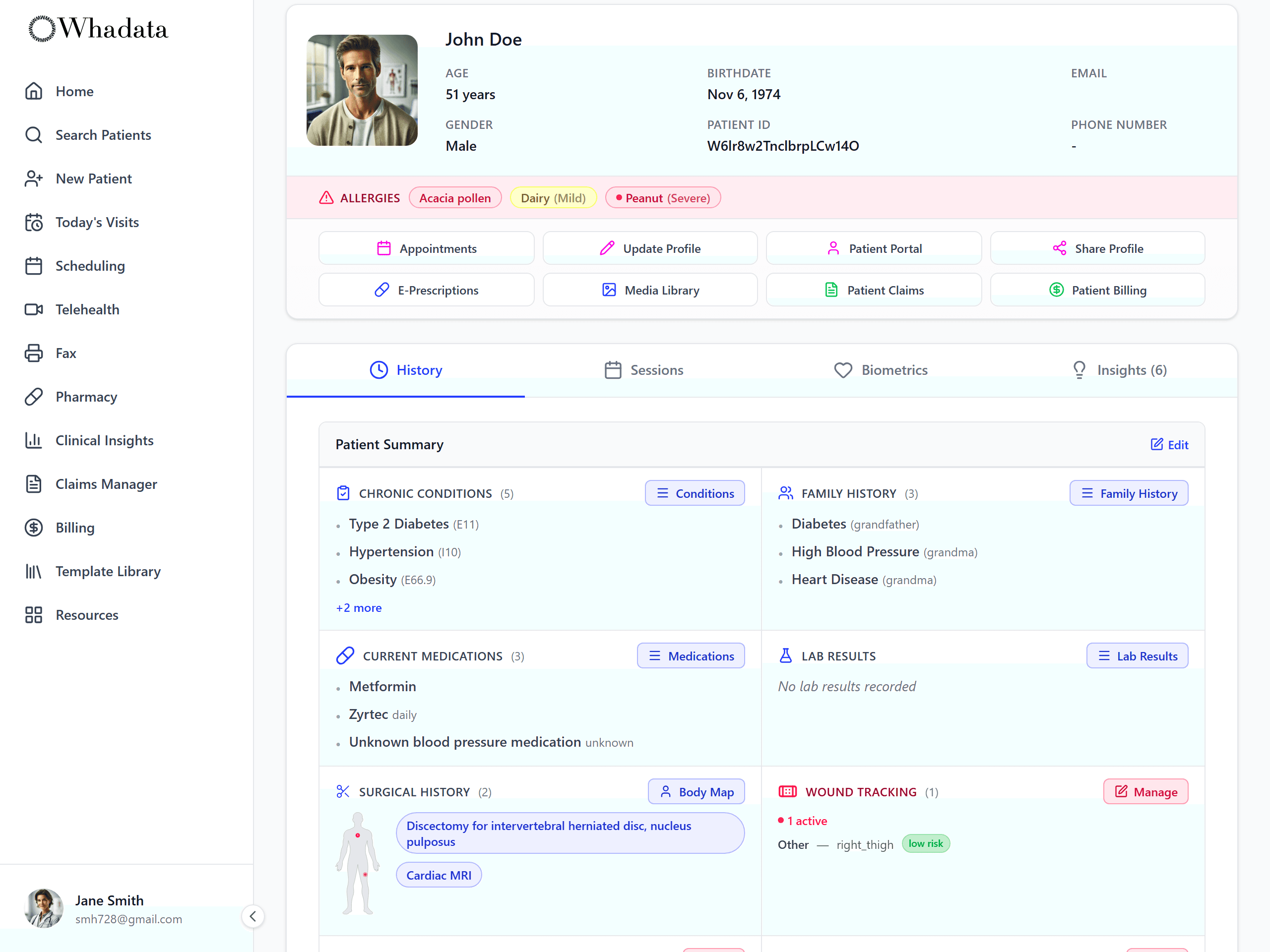
Every visit becomes structured data. Insights pulls vitals, medications, allergies, conditions, immunizations, and history out of your transcripts and documents, codes them to clinical standards, charts them over time, and flags the risks and care gaps worth a second look. You review before anything lands in the chart.
One record, every encounter
Insights builds a longitudinal record from your Scribe transcripts and uploaded documents. Allergies, problems, medications, immunizations, labs, surgical history, and family and social history get extracted, coded, and ready to review in seconds. Every item shows its confidence and the line it came from, and you accept, edit, or reject before it commits.
- Extracts allergies, problems, meds, immunizations, labs, surgical, family, and social history
- Confidence score on every item; low-confidence flagged for review
- Source-cited: tap any field to see the transcript quote
- Smart merge: new items added, existing updated, duplicates skipped
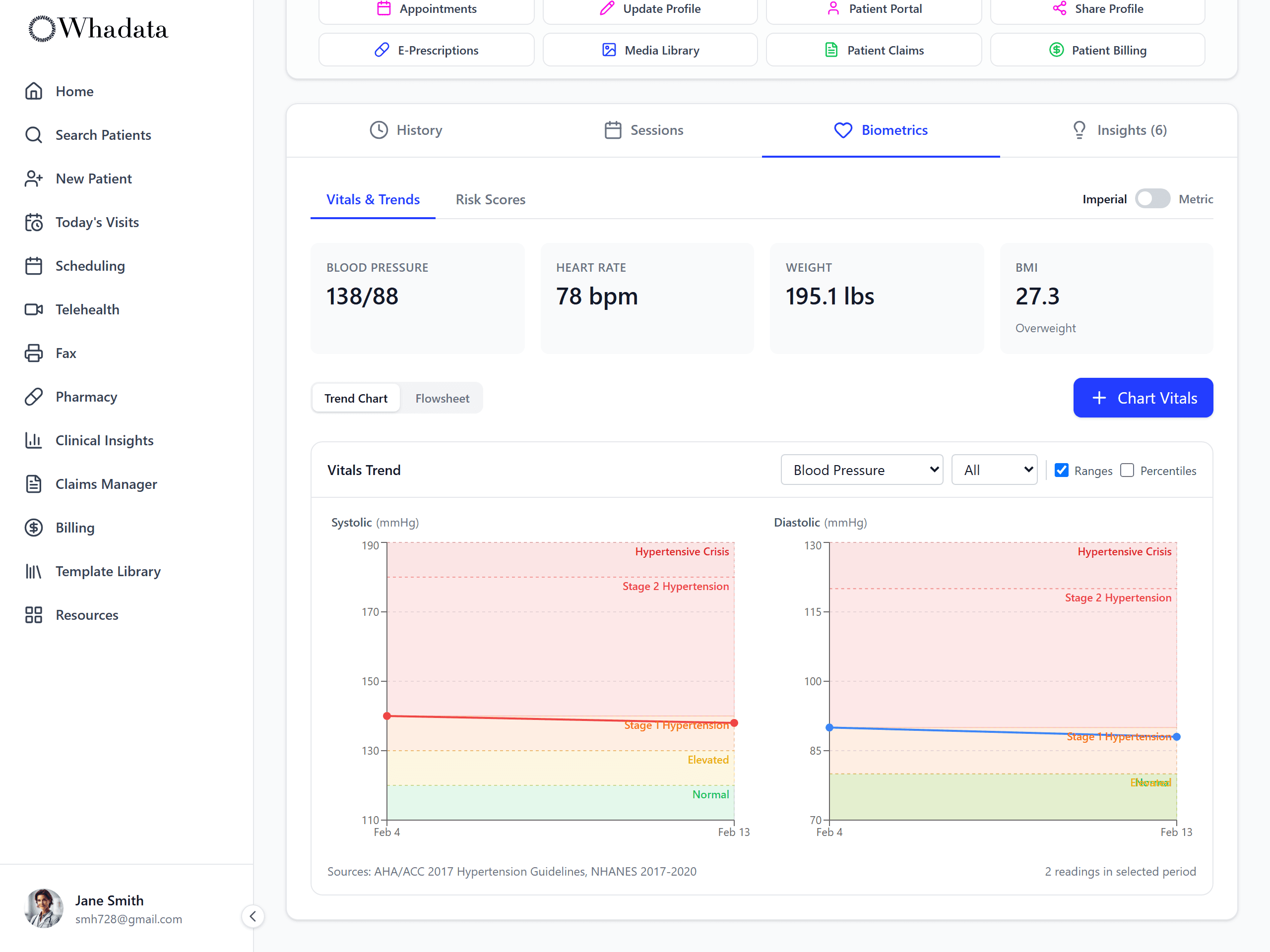
Vitals over time, finally legible
Blood pressure, heart rate, SpO2, temperature, respiratory rate, weight, height, BMI, blood glucose, pain, and waist and head circumference get pulled from the visit, plotted across time, and benchmarked to growth curves for younger patients.
- A dozen vital types, charted over time
- Pediatric growth curves: BMI-for-age, weight-for-length, head circumference
- Category flags for BP staging, BMI class, and out-of-range readings
- US and metric units, with a full edit and amend audit trail
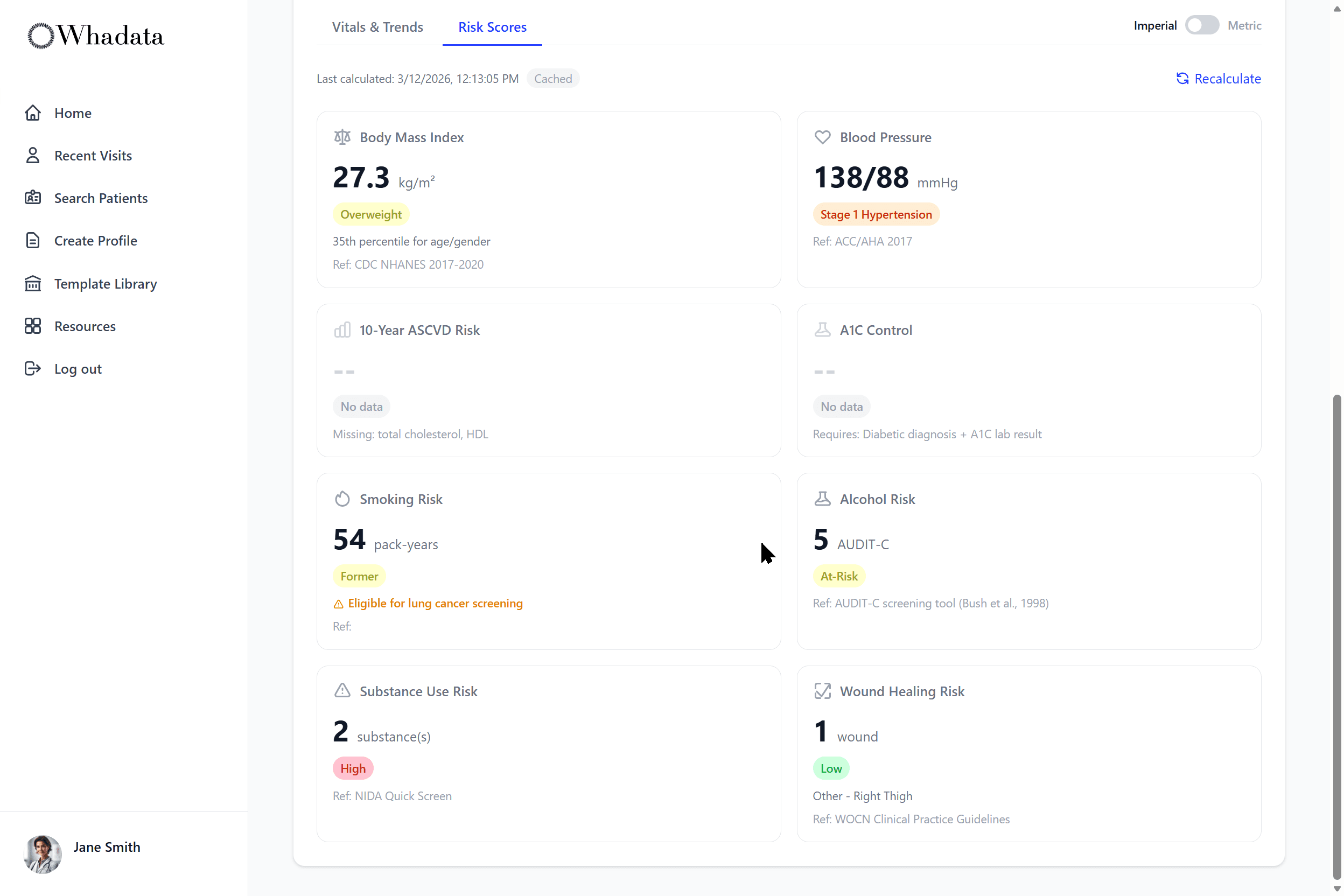
The chart that points at things
Insights scores each patient on eight clinical risks and surfaces care gaps at the point of care, not in a year-end report. Every insight carries a priority and a suggested next step, and you can complete, dismiss, or snooze it. Zoom out and the same engine ranks your whole panel by alerts and risk.
- Eight risk scores: ASCVD, A1C control, blood pressure, BMI, smoking, alcohol, substance use, wound healing
- Care-gap insights by category: preventive, monitoring, medication, history, risk
- Each insight prioritized with a suggested action; complete, dismiss, or snooze
- Panel view: at-risk patient list plus alert and risk analytics
Questions worth an answer
What does Insights actually extract?
Allergies, problems, medications, immunizations, labs, surgical history, and family and social history, plus vitals and biometrics: blood pressure, heart rate, SpO2, temperature, respiratory rate, weight, height, BMI, blood glucose, pain, and waist and head circumference. Everything is coded to clinical standards and plotted across time, with growth curves for younger patients.
Does extracted data write itself into the chart?
No. Every item shows its confidence and the line of the transcript it came from, and you accept, edit, or reject it before it commits. Nothing lands in the record without a human deciding.
Where does Insights get its data?
From your Scribe transcripts and the documents you upload. It builds a longitudinal record out of visits you already had, rather than asking anyone to key in history a second time.
What are risk scores and care gaps?
Insights scores each patient on eight clinical risks and surfaces care gaps at the point of care rather than in a year-end report. Every insight carries a priority and a suggested next step, and you can complete, dismiss, or snooze it. The same engine ranks your whole panel by alerts and risk.
Is this clinical decision support I have to follow?
No. Insights surfaces what is worth a second look and shows the source for each item. The clinical decision stays yours, and what you accept or reject is recorded.
What feeds the record
Insights reads what the visit produced and hands structure to everything downstream of the chart.
Go deeper
Terms this module works with
Next steps
- Compare Whadata to your current EHR: Side by side with six platforms on scope, pricing, and AI.
- Pricing: every module for one posted rate per provider.
- Glossary: the EHR, practice management and revenue cycle terms behind the platform.
The whole chart already written
Book a demo and we'll show Insights running on a sample panel of patients.