Clean claims First time
A coding engine reads the Scribe note and builds the claim. It scrubs for NCCI edits, scores the odds of a denial, and hands you the fixes, so the CMS-1500 goes out clean the first time.
See the Claims Module
Codes pulled from a signed visit note, an NCCI scrub that flags a bundled visit code and names the modifier, and a denial-risk score that drops when the fix is accepted. Filmed in the live app on a synthetic patient; nothing was submitted.
The codes come from the visit
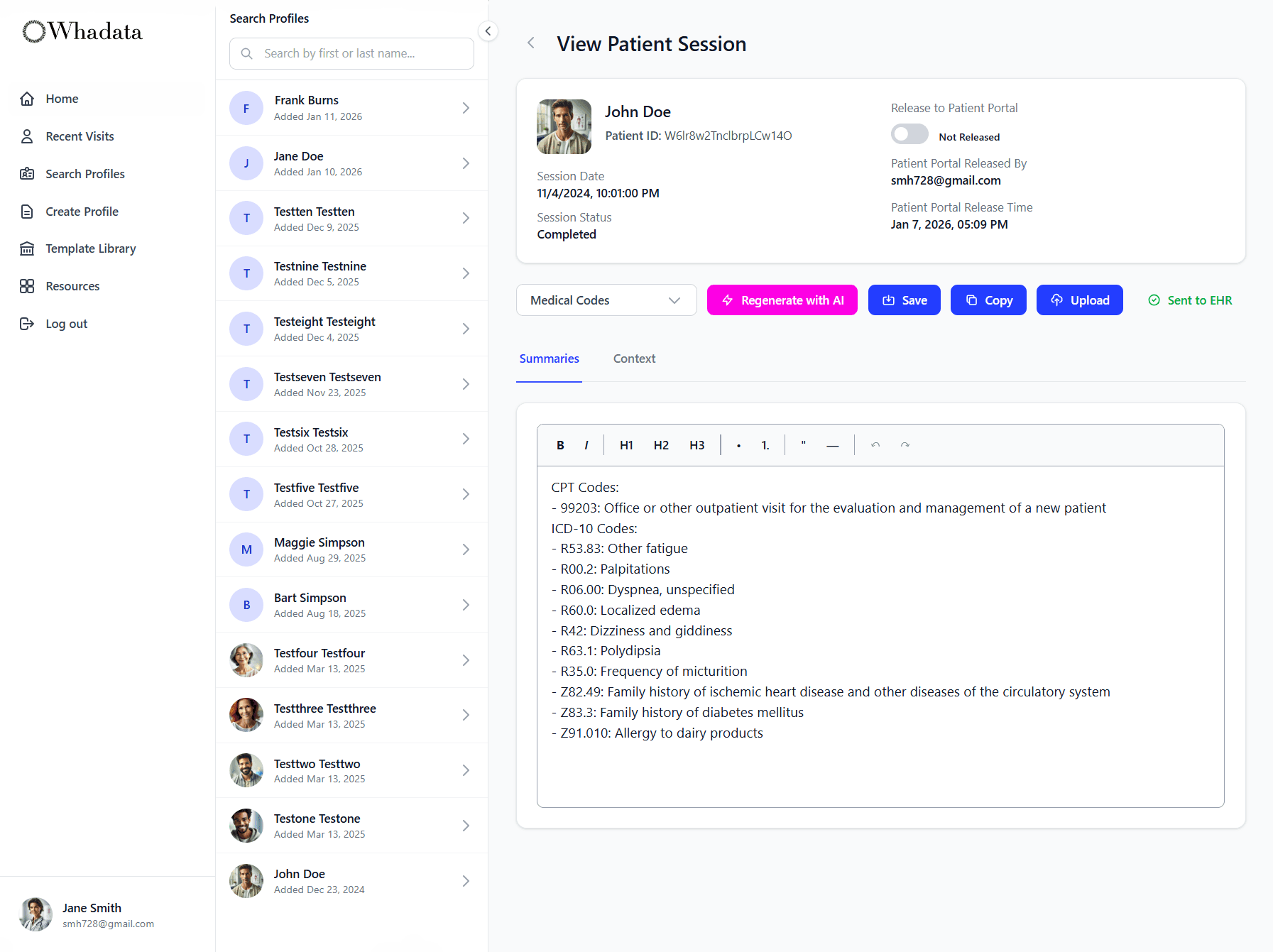
A coding engine reads the Scribe note and pulls the diagnoses and procedures for the claim: ICD-10, CPT and HCPCS with units and charges. Everything lands on an editable worksheet where you can search codes, adjust, and confirm before anything goes out.
- Diagnoses and procedures extracted from the note
- ICD-10-CM with HCC category lookup
- CPT and HCPCS with modifiers, units, and charges
- Search and edit codes on a worksheet
A scrub that tells you why
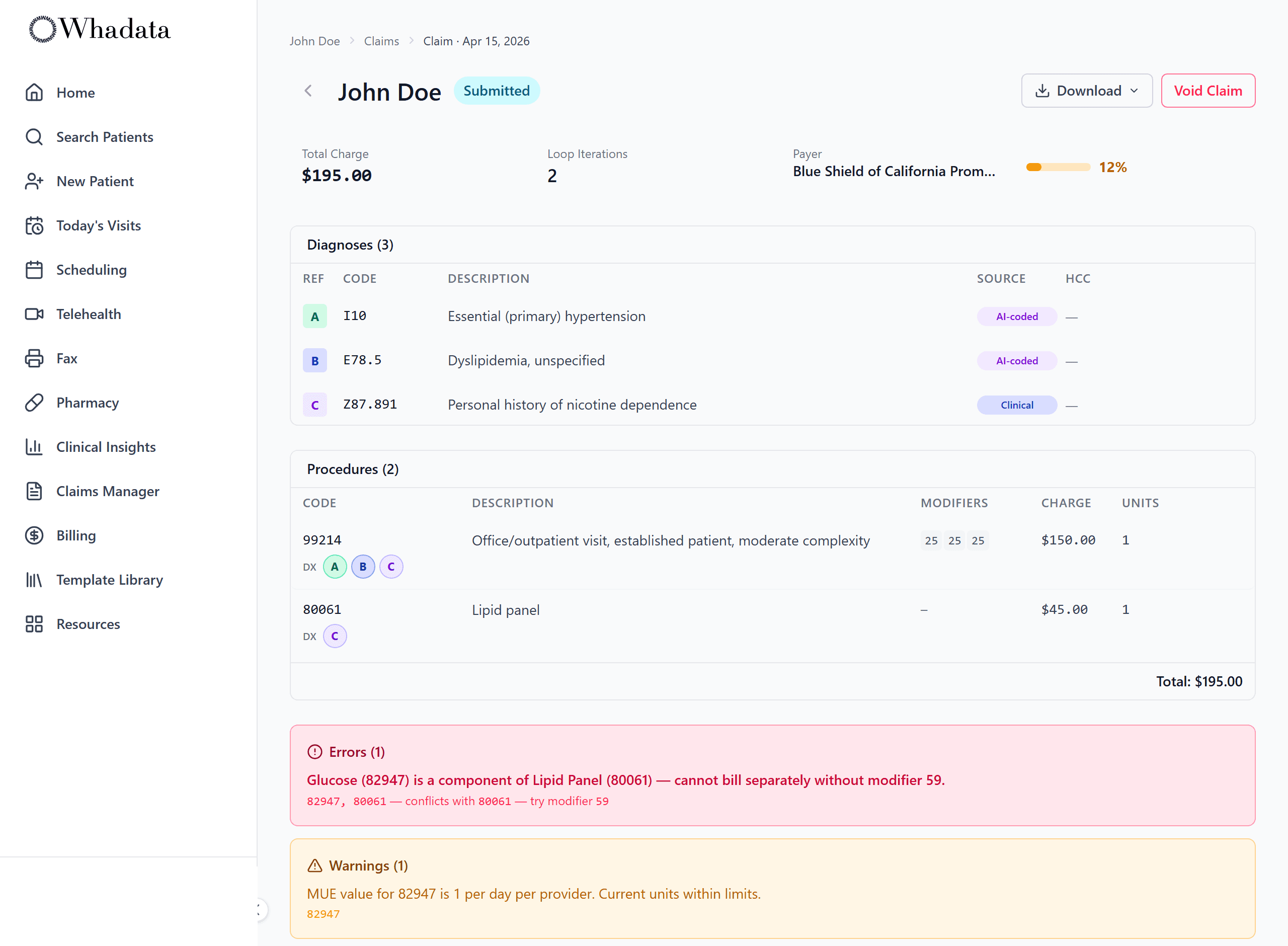
Before the claim leaves, it runs through NCCI edits. The scrubber catches procedure-to-procedure conflicts and medically-unlikely unit counts, and explains each one in plain language with the codes involved and the fix, not a generic reject.
- NCCI procedure-to-procedure (PTP) edits
- Medically Unlikely Edits (MUE) on units
- Bundling and component conflicts flagged with the reason
- Suggested modifier when one applies
See the denial before the payer does
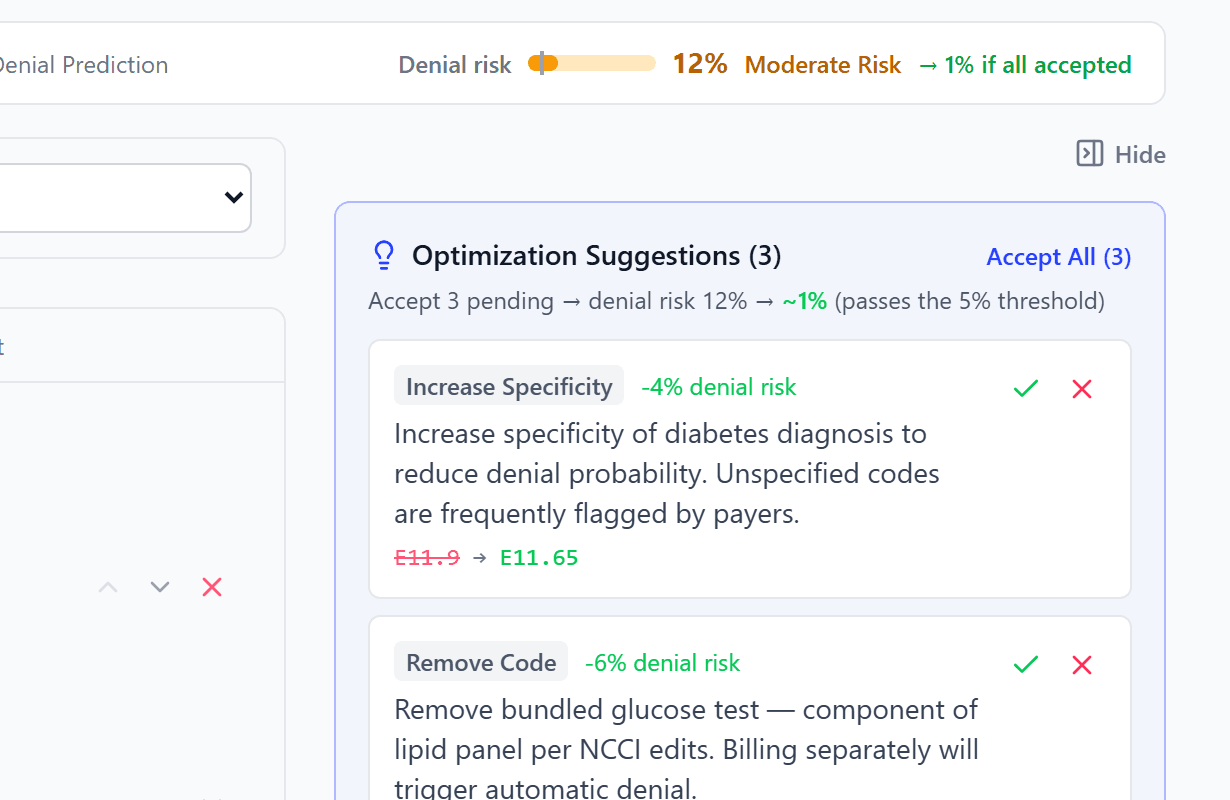
Each claim gets a denial-probability score and a ranked list of fixes: tighten an unspecified diagnosis, drop a bundled code, add a modifier. Each fix that moves the score shows how much it lowers the risk, so you can clean the claim up and generate the CMS-1500 or superbill with confidence.
- Denial probability scored per claim
- Suggested fixes: increase specificity, remove bundled codes, add modifiers
- Fixes that move the score show their estimated impact
- Generate the CMS-1500 claim form and superbill
Questions worth an answer
Where do the codes come from?
A coding engine reads the Scribe note and pulls the diagnoses and procedures for the claim: ICD-10, and CPT and HCPCS with units and charges. Everything lands on an editable worksheet where you can search codes, adjust, and confirm before anything goes out.
What does the scrubber check?
NCCI edits, before the claim leaves. It catches procedure-to-procedure conflicts and medically-unlikely unit counts, and explains each one in plain language with the codes involved and the fix, rather than returning a generic reject.
What is a denial-probability score?
Each claim gets a score plus a ranked list of fixes: tighten an unspecified diagnosis, drop a bundled code, add a modifier. Each fix that moves the score shows how much it lowers the risk, so you can clean the claim up before submitting rather than after a denial.
What comes out at the end?
A CMS-1500 or a superbill, generated from the confirmed worksheet, and, once the practice is switched on for submission at go-live, the claim goes out electronically to the clearinghouse with its status tracked on the claim and remittances posted back to the ledger.
What do claims cost?
$1 per claim submitted, billed monthly on what you actually sent. Corrected resubmissions are free. Whadata never takes a percentage of your collections.
From chart to claim
The claim is built out of the note that documented the visit, then handed to billing.
Go deeper
Terms this module works with
- Revenue Cycle Management (RCM): The financial process of capturing, submitting, and collecting payment for care, from charge capture through claims and patient billing.
- ICD-10-CM (ICD-10): The diagnosis coding system used in the US to classify conditions for documentation and billing.
- Current Procedural Terminology (CPT): AMA-maintained codes describing medical procedures and services, used on claims.
- Healthcare Common Procedure Coding System (HCPCS): Codes for services, supplies, and drugs not covered by CPT, used especially by Medicare and Medicaid.
- Hierarchical Condition Category (HCC): A risk-adjustment model that maps diagnoses to risk scores used in Medicare Advantage and value-based payment.
- National Correct Coding Initiative (NCCI): CMS edits that prevent improper code combinations on claims.
- Procedure-to-procedure edits (PTP): NCCI edits that flag pairs of codes that should not be billed together for the same patient on the same day.
- Medically Unlikely Edits (MUE): NCCI limits on the units of a service a provider would normally report for one patient on one day.
- CMS-1500: The standard claim form for professional (non-institutional) provider claims.
- Superbill: An itemized list of the services provided at a visit, used to generate a claim or for patient reimbursement.
- Charge capture: Recording the billable services from an encounter so they can be coded and submitted on a claim.
- Denial management: Identifying, working, and preventing payer claim denials to recover revenue.
Next steps
- Compare Whadata to your current EHR: Side by side with six platforms on scope, pricing, and AI.
- Pricing: every module for one posted rate per provider.
- Glossary: the EHR, practice management and revenue cycle terms behind the platform.
Get paid for the work you did
Codes from the visit, an NCCI scrub, and a denial score, on a working route from chart to claim.